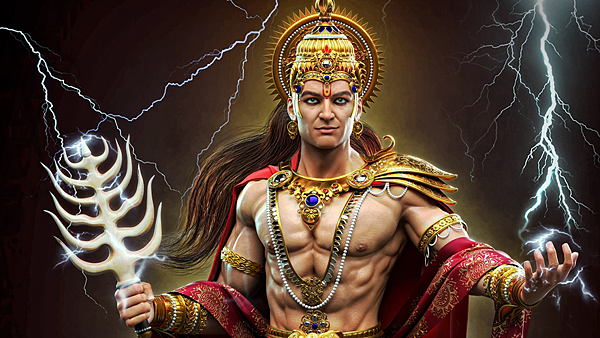
大約四分之一的 RV 讚美詩中單獨援引因陀羅,遠遠多於對任何其他神靈的稱呼;因為他是吠陀人民最喜愛的民族神。與萬神殿中的任何其他成員相比,他在身體方面更加擬人化,並且更加重視神話意象。他主要是雷暴之神,征服了乾旱或黑暗的惡魔,釋放了水域或帶來了光明。其次,他是幫助勝利的雅利安人戰勝原住民敵人的戰神。
|
HYMN LI. Indra. |
讚美詩 51 因陀羅 |
|
|
1 |
अभि तयं मेषं पुरुहूतं रग्मियमिन्द्रं गीर्भिर्मदता वस्वो अर्णवम | abhi tyaṃ meṣaṃ puruhūtaṃ ṛghmiyamindraṃ ghīrbhirmadatā vasvo arṇavam |
MAKE glad with songs that Ram whom many men invoke, worthy of songs of praise, Indra, the sea of wealth; |
用許多人所祈求的Ram(即Rama;羅摩,毘濕奴的第七個化身,也是最受歡迎的化身之一)的歌而喜悅,值得讚美的歌,因陀羅,財富之海;他對人類的仁慈像天堂一樣傳播開來:歌頌他這位聖人,為我們的利益而慷慨。 |
|
2 |
अभीमवन्वन सवभिष्टिमूतयो.अन्तरिक्षप्रां तविषीभिराव्र्तम | abhīmavanvan svabhiṣṭimūtayo.antarikṣaprāṃ taviṣībhirāvṛtam |
As aids the skilful Ṛbhus yearned to Indra strong to save, who fills mid-air, encompassed round with might, |
作為幫助,善巧的**Ṛbhus渴望因陀羅的強力拯救,因陀羅充滿在虛空,充滿力量,狂喜地奔湧;歡呼聲響起,催促他走向勝利。
**在吠陀文獻的早期階段,它指的是太陽神。它演變為風神,此後指三名男性工匠,他們的能力和苦行使他們在後來的吠陀文本中成為神。 |
|
3 |
तवं गोत्रमङगिरोभ्यो.अव्र्णोरपोतात्रये शतदुरेषु गातुवित | tvaṃ ghotramaṅghirobhyo.avṛṇorapotātraye śatadureṣu ghātuvit |
Thou hast disclosed the kine's stall for the Aṅgirases, and made a way for Atri by a hundred doors. |
你為*Aṅgirases打開了牛棚,並為**Atri開闢了一百扇門的道路。你賜給***Vimada食物和財富,讓你的閃電在獻祭者的戰鬥中翩翩起舞。
*印度教吠陀聖人(rishi)。《梨俱吠陀》中將他描述為神聖知識的老師、人與神之間的調解者,並在其他讚美詩中被描述為阿格尼-德瓦斯(火神)的第一位。
**七位偉大的聖人或Saptarshi之一。根據吠陀時代的傳說,賢者阿特里(Atri)與阿納蘇亞·德維(Anasuya Devi)結婚。他們育有三個兒子:Dattatreya、Durvasa 和 Chandra。根據神的記載,他是七位薩塔里什人中的最後一個,並被認為起源於舌頭。阿特里的妻子是阿納蘇亞(Anasuya),她被認為是七位女性帕蒂瓦塔之一。當神音指示要苦修時,阿特麗欣然同意並進行了嚴厲的苦修。印度教的三位一體,即梵天、毘濕奴和濕婆對他的奉獻和祈禱感到高興,出現在他面前並向他提供恩惠。 ***Vimada (विमद).-一位誠實的國王。有一次,一位名叫 Kamadyū 的公主在她的 Svayaṃvara 婚禮上接受了 Vimada 作為她的丈夫。在場的國王和王子們嫉妒Vimada並準備戰爭。無助的維馬達讚頌了Aśvinīdevas。眾神擊敗了敵人,並將新娘賜給Vimada |
|
4 |
तवमपामपिधानाव्र्णोर अपाधारयः पर्वते दानुमद वसु | tvamapāmapidhānāvṛṇor apādhārayaḥ parvate dānumad vasu |
Thou hast unclosed the prisons of the waters; thou hast in the mountain seized the treasure rich in gifts. |
你打開了水障;你在山上奪取了豐富的寶藏。當你用強大的力量殺死了巨龍Vṛtra時,因陀羅,你把太陽升到了天上,讓所有人都可以看到。 |
|
5 |
तवं मायाभिरप मायिनो.अधमः सवधाभिर्ये अधि शुप्तावजुह्वत | tvaṃ māyābhirapa māyino.adhamaḥ svadhābhirye adhi śuptāvajuhvata |
With wondrous might thou blewest enchanter fiends away, with powers celestial those who called on thee in jest. |
你以奇妙的力量,以天國的力量,吹散了那些以戲謔的方式呼喚你的人。你,英雄般的心,摧毀了Pipru(被因陀羅征服的惡魔)的堡壘,並在Dasyus(北印度的古代居民。)被擊斃時幫助了Ṛjiśvan(古印度的一位國王)。 |
|
6 |
तवं कुत्सं शुष्णहत्येष्वाविथारन्धयो.अतिथिग्वाय शम्बरम | tvaṃ kutsaṃ śuṣṇahatyeṣvāvithārandhayo.atithighvāya śambaram |
Thou savedst Kutsa when Śuṣṇa was smitten down; to Atithigva gavest Śambara for a prey. |
當Śuṣṇa(阿修羅)被擊倒時,你拯救了Kutsa(Cakṣsuṣa Manu 的兒子。);Atithigva 給予Śambara作為獵物。你踐踏了強大的Arbuda:你自古以來就是為了擊殺Dasyus而生的。 |
|
7 |
तवे विश्वा तविषी सध्र्यग घिता तव राधः सोमपीथाय हर्षते | tve viśvā taviṣī sadhryagh ghitā tava rādhaḥ somapīthāya harṣate |
All power and might is closely gathered up in thee; thy bounteous spirit joys in drinking Soma juice. |
所有的力量和力量都緊密地聚集在你身上;你慷慨的精神享受喝Soma汁。眾所周知,你懷中的雷電:用它撕掉我們敵人的所有男子氣概。 |
|
8 |
वि जानीह्यार्यान ये च दस्यवो बर्हिष्मते रन्धया शासदव्रतान | vi jānīhyāryān ye ca dasyavo barhiṣmate randhayā śāsadavratān |
Discern thou well Āryas and Dasyus; punishing the lawless give them up to him whose grass is strewn. |
你能很好地辨別Āryas和Dasyus;懲罰不法之人,交給撒草的人。你是祭祀者的強大鼓勵者,你所有這些的行為都是我在節日裡的快樂。 |
|
9 |
अनुव्रताय रन्धयन्नपव्रतानाभूभिरिन्द्रः शनथयन्ननाभुवः | anuvratāya randhayannapavratānābhūbhirindraḥ śnathayannanābhuvaḥ |
Indra gives up the lawless to the pious man, destroying by the Strong Ones those who have no strength. |
因陀羅將無法無天的人交給虔誠的人,用強者消滅那些沒有力量的人。瓦姆拉(Vamra)受到榮耀後,摧毀了堆積如山的、即將升入天堂的偉大人物的堆積物。 |
|
10 |
तक्षद यत त उशना सहसा सहो वि रोदसी मज्मना बाधते शवः | takṣad yat ta uśanā sahasā saho vi rodasī majmanā bādhate śavaḥ |
The might which Uśanā hath formed for thee with might rends in its greatness and with strength both worlds apart. |
Uśanā為你所形成的力量以其偉大和力量撕裂了兩個世界。哦,英雄靈魂,Vāta的戰馬,在思想的束縛下,讓你聲名鵲起,而你卻充滿了力量。 |
|
11 |
मन्दिष्ट यदुशने काव्ये सचानिन्द्रो वङकू वङकुतराधि तिष्ठति | mandiṣṭa yaduśane kāvye sacānindro vaṅkū vaṅkutarādhi tiṣṭhati |
When Indra hath rejoiced with Kāvya Uśanā, he mounts his steeds who swerve wider and wider yet. |
當因陀羅 (Indra) 對卡維亞·烏沙納 (Kāvya Ushanā) 感到高興時,他騎上他的戰馬,馬匹轉向得越來越寬。強者用急速的暴雨鬆開了他的箭,他把śuṣṇasya堅固的堡壘撕成了碎片。 |
|
12 |
आ समा रथं वर्षपाणेषु तिष्ठसि शार्यातस्य परभ्र्तायेषु मन्दसे | ā smā rathaṃ vṛṣapāṇeṣu tiṣṭhasi śāryātasya prabhṛtāyeṣu mandase |
Thou mountest on thy car amid strong Soma draughts: Śāryāta brought thee those in which thou hast delight. |
你在強勁的蘇摩風中登上你的戰車:Śāryāta為你帶來了你所喜愛的那些。因陀羅,當你對那些擁有蘇摩氣流的人感到滿意時,你就會在天空中獲得無與倫比的榮耀。 |
|
13 |
अददा अर्भां महते वचस्यवे कक्षीवते वर्चयामिन्द्र सुन्वते | adadā arbhāṃ mahate vacasyave kakṣīvate vṛcayāmindra sunvate | To old Kakṣīvān, Soma-presser, skilled in song, O Indra, thou didst give the youthful Vṛcayā. |
因陀羅啊,你賜給了年輕的維卡亞(Vṛcayā)給年長的卡克希萬(Kaksīvān),蘇瑪普雷瑟(Soma-presser),擅長歌唱。你非常聰明,是維桑希瓦的孩子梅納:你的這些事蹟都必須在蘇摩的集會上講述。 |
|
14 |
इन्द्रो अश्रायि सुध्यो निरेके पज्रेषु सतोमो दुर्यो न यूपः | indro aśrāyi sudhyo nireke pajreṣu stomo duryo na yūpaḥ | The good man's refuge in his need is Indra, firm as a doorpost, praised among the Pajras. |
善人在需要時的庇護所是因陀羅,堅固如門柱,在*Pajras中受到讚揚。唯獨因陀羅是財富之主、給予者、財富、戰車、牛和馬的熱愛者。
*這是 Kaksīvant 家族的名字 (Pajriya)。《梨俱吠陀》中多次提到這一點。根據皮舍爾的說法,他們的綽號 prksa-yāmas 的意思是“進行輝煌的祭祀表演”,這為他們贏得了斯魯塔拉塔的慷慨。在兩段經文中,羅斯看到了一個名為薩曼(Sāman)的帕吉拉(Pajra)。這是不確定的,但無論如何,Pajra 似乎明確提到了。在其他地方,這個詞是否是專有名詞是非常值得懷疑的。在《薩蒂雅納》中,Pajras 被稱為 Añgirases。 |
|
15 |
इदं नमो वर्षभाय सवराजे सत्यशुष्माय तवसे.अवाचि | idaṃ namo vṛṣabhāya svarāje satyaśuṣmāya tavase.avāci | To him the Mighty One, the self-resplendent, verily strong and great, this praise is uttered. |
對他這位偉大的、自負的、真正強大和偉大的人來說,這是對他的讚美。願我們和所有英雄以及王子們在這場戰鬥中,因陀羅啊,有你的守護。
|

請先 登入 以發表留言。